We do not use cookies to make your experience better — to be honest, we use them to make our development simpler.
This banner exists because, to comply with the current e-Privacy directive, we need to ask for your consent to set cookies.
Usually companies build metres-long cookie choosers that are legal and show how laughable EU directives are. We have chosen a different path: we store no data, so you can hit Allow Cookies and no data will be stored. If you do not agree, you can hit the “x” and the same will happen — no data will be stored. If you made it this far you defy statistics, so the best choice is to leave the site; you are welcome to — you are using bandwidth someone is paying for.
A Granada detour — Alhambra, Lorca, an Inquisition exhibition, and a flamenco night — written with an IT eye. The “overestimation of human intelligence” here points at the Inquisition. Is a disquisition about duende and mortality even possible with AI?
This note starts from the huge impact AI is having on the software labour market — without replaying Reading Obsolete. I learned Total Quality first in construction services (2000), then cooperatives and industry, heard Alberto Galgano (2009), read Qualità totale, and ask whether seniors should become quality managers instead of “conductors” — or, in current jargon, orchestrators.
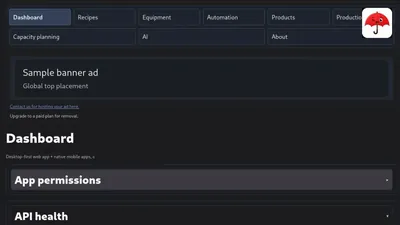
AI is compressing the cost of building and maintaining software. That threatens some “coding machine” jobs — and it also reopens niche custom apps that budget once killed. A practitioner’s note for freelancers, small agencies, NGOs and organisations, with Umbraculum only as an illustrative stack example (not an endorsement). For how that can look in practice, see also the Umbraculum niche-stack field note.
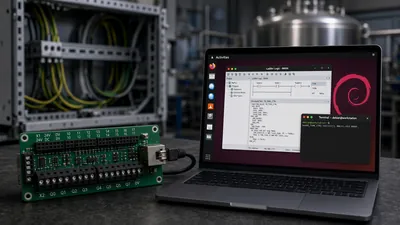
OpenPLC is open source. That is not a slogan for this brewery project — it is how we reverse-engineered the Editor project layout, the Runtime upload path, and the generated ST so AI-assisted work could stay grounded in real code. Here is what that looked like in practice.
AI in the IDE raises GDPR-shaped questions: what leaves the sandbox, who processes prompts, and when on-prem DeepSeek on EU GPU (e.g. Contabo) is the honest answer for agencies and privacy-focused merchants.
A developer’s field note (used the stack locally — not a maintainer write-up) on Umbraculum as an illustrative niche stack for native iOS/Android + web from one monorepo (Tamagui/Expo, AGPL core + MIT SDK, Cursor toolset apparatus). Not an endorsement. Companion to Niche projects as future prospect.
Garrison Lovely’s Obsolete (OR Books) frames AI as a capital project to replace human labour. Here is a practitioner’s take on the ethical stakes and the technical habits that keep AI useful without surrendering judgment.
AI authoring is useful when it sits inside a discipline: explicit rules, runnable procedures, specialist agents, and gates that refuse bad work. Here is how that looks across complex development work (Magento, PLC, ERPs, native apps) — with orchestration, analysis, and tests ahead of vibes.
For the first time in open source, I feel something chilling — that we could have surrendered our intellectual strength to the big tech giants. I could be wrong. I do not like this feeling. PhotoCraft’s “you already know” is where that doubt starts.
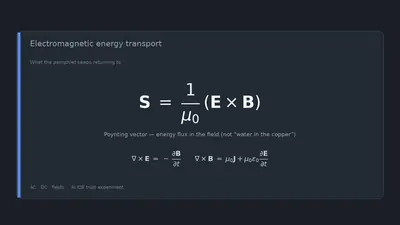
How much can you trust an AI IDE on well-known logic and technical detail when the chat context periodically resets? I answered that by forcing a pamphlet on electromagnetic fields — a domain I am not expert in — inside an unrelated PLC project workspace. The surprising part was not the fluency: it was how little context was lost when the job stayed gated and organised.