
Not against AI — but questioning AI greenwashing and the failure of a society that forgets history
Mario Rigoni Stern is gone (1921–2008), but I am sure his trees are still growing, and his legacy is stronger than ever. He wrote books that stay with you: Il sergente nella neve (The Sergeant in the Snow), Ritorno sul Don (Return to the Don), Uomini, boschi e api (Men, Woods and Bees), Le stagioni di Giacomo (The Seasons of Giacomo), and Arboreto salvatico (Wild Arboretum, Einaudi). For me, Arboreto salvatico is one of his clearest legacies.
He was an Italian soldier on the Eastern Front in the Second World War, in the Alpine corps, in the retreat from the Don toward Nikolajevka — cold, hunger, responsibility for other men, a hard memory that never becomes spectacle in his pages. Afterwards he lived on the Altipiano di Asiago (the Asiago plateau): woods, seasons, neighbours, bees, trees. He wrote an Italian I like very much, and I often come back to it — whether I am wondering what the future might be, or how the past was. Emotion reaches you without philosophy as a costume. Arboreto salvatico is a book of twenty trees — larice (larch), abete (fir), pino (pine), sequoia (sequoia), faggio (beech), tiglio (lime), tasso (yew), frassino (ash), betulla (birch), sorbo (rowan), castagno (chestnut), quercia (oak), ulivo (olive), salice (willow), noce (walnut), pioppo (poplar), melo (apple), acero (maple), gelso (mulberry), and ciliegio (cherry) — each a short chapter that starts from the living plant (form, habitat, uses) and opens into an enormous culture: myth, popular belief, history, craft, and literature. He can move from bark and wood to Virgilio (Virgil) without leaving the plateau. It is forest knowledge and a cultivated memory of Europe at once — shaped by a hard life, so it never turns into cold expertise or a brand of “nature writing.” It stays close to the woods and to the people who live — and die — by them.
And here comes the point.
He did not rush — as Western AI culture now tries to push you toward (this rush is not new: it belongs to industrial culture, and perhaps was already there before; it is exploitation): faster drafts, faster “insight,” faster product, another tree planted in a press release. He stepped back, and planted trees. Not as greenwashing. Not as the big AI corporations do when they buy carbon credits and call it care (I do not even have a clean English word for what Yanis Varoufakis calls techno-feudalism — platforms that rent you back your own attention and call it progress). Planting trees is something I really love, and I would advise anyone to do it. Trees survive us — and if a particular tree does not, that is not even the point. Look at the redwoods. Look at the olives. Perhaps olive trees that stood in the landscape of the Jesus of Nazareth revolution are still there — because no matter how his words have been used later, he, like Gautama, is one of the great revolutionaries in human history: a demand on how we treat one another, not a logo.
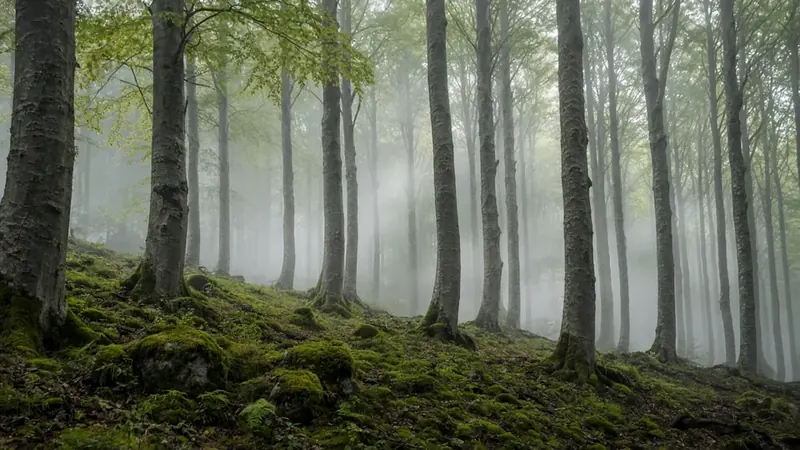
I go to the mountains and I still see beech trees that were there on the Alpine front line in the First World War. Some are still standing and bear the wounds of that war. Shards are scattered up there; some are still deep inside the old beeches. The wood grew around metal. In the well by my hut I found an Austrian helmet; the main piece of the hut hearth is a stone marker that still bears engraved the numbers of the Austrian battlefield sector. My friend Francesco and others created the Museo della Guerra di Bersone, collecting a great many pieces around the villages and on the Adamello. I helped find Lieutenant Herbert Hermann’s daughter, Michelle Adkins Maniarrez (Hermann died in WWII when trying to land his bomber above the village of Storo). The research was an adventure. I still remember the emotion of Michelle breaking down in tears when she answered my phone call: she was over sixty, and no one had ever called her before with the surname of her natural father. History did not become a slideshow. It stayed in the trunk — and sometimes it answers the phone.
For me (born in 1980), the Second World War was never a remote chapter. It was part of ordinary life. At school, teachers invited us to go to our grandfathers and uncles and ask about WWII. That was not abstract homework. It was walking into rooms where the century still sat at the table.
My grandfather on my father’s side died when I was seven. Class of 1911. A veteran who fought in Albania, Yugoslavia, Ethiopia, and France, where he was captured by Nazi Germany in Grenoble in 1943. He spent two years in a concentration camp, then joined the Allies after “Liberation.” Another uncle, Davide, fought a year on the Russian front and afterwards considered himself saved because he had been wounded. My grandmother worked for the Organisation Todt, like many young people on the Alps, carrying barbed wire to the First World War fortifications to refortify them. That was routine — as routine, from home as a boy, as looking out of the living-room window onto WWI fortifications still intact, and trenches. It shaped me. I loved trekking around home; everywhere trenches, fortifications, caves. That does not leave you alone sometimes — even if it was not Ypres, or the Marne, or the Somme. That landscape still hunts me sometimes — and so does Roger Waters’s “The Ballad of Bill Hubbard”: a song I love, and one that summarises for me the WWI (and possibly any war) I saw as a child on the mountains. That “I’m feeling bad… […] Put me down, put me down. I’d rather die, I’d rather die” — a voice directly from there — is chilling. This is no movie. It reminds me what war is.
There is still a sign in a hut above the village in the mountains: “Nikolajevka.” Up there lived Celestino, who came back from the Eastern Front of WWII and retired into those woods, managing until the 1980s a small informal bar. I heard his story many times. Just this summer I read again his memorial for the comrades who died on that front — Alpini like him. Was he simply “for the war”? People who knew him still remember him putting on Bandiera Rossa and training his dogs to bark like mad when the song came on. I am not saying that goes down in history as the ethically right thing. I am simply saying what I heard with my own ears: people came back traumatised, with a deep aversion to war, and with no clear meaning for what they had “gone there” for. Almost everyone I knew who went to war — the First World War, the Second, the colonial wars — had been conscripted. That alone already shows that people do not choose war: if you hide, you get executed. That is the simple fact. As far as I can verify, no one from the village joined the volunteer forces of the Fascist Italian Social Republic of Salò; yes, it is possible that someone did, but they would have been an absolute minority. The Alpini were the mountain infantry of the monarchy — and Italy remained a monarchy until 1946.
And what about my cousin’s grandfather? In 1916 he was an Austrian soldier — Trentino was then part of the Austrian Empire — captured by the Russians in Galicia. After capture he fought alongside the Soviets in the 1917 revolution. Coming back into the new Italy was not easy; he was imprisoned. His son, Rino Battisti, became one of the most important CGIL unionists of the big post-WWII construction works in Trentino — the great dams for hydroelectric power. Mattia Pelli wrote about that world in “Dentro le montagne.” (Inside the Mountains) and “Manon, 1954. Quando i morti si contavano al chilometro.” (Manon, 1954. When the dead were counted by the kilometre). I still hold onto what I heard from Rino when I was a boy; it shaped my view of the world. He really believed in a better world. Whether the world he envisioned was the “right” better world is beside the point: he helped a lot of workers and families. I have been in Val di Fumo many times. I have spoken to Pierino, who knew him. The valley below the glacier is a natural landscape wounded by the huge dam — ruined in one sense, and still carrying the power of man at play and of the post-war revolution. I love the mountains there: they are wild; the river is clean. Last summer I was fishing there again — just cold in the water, but beautiful. What I cannot bear is that people from the city must now pay to reach the valley, in a world that badly needs people going to the woods instead of staying in front of a mobile phone. That sucks.
Neither did my uncle Luis forget. He died two years ago in France at a hundred years old. He was an Italian — even if he had moved to France as a young man and came back to Italy only when called up by the army, then migrated back to France after WWII — a veteran. Different path through the same century of violence that polite societies prefer to summarise too quickly. He carried it as long as a human life can carry anything.
Arboreto salvatico is not a manual for “sustainability messaging.” It is a man listening to trees — botanical fact, local story, myth, memory — and refusing to treat the living world as decoration for a brand. “Salvatico,” he reminds us, leans toward both wild and salvific. That double meaning matters more to me than another AI corporation’s post-humanist manifesto.
I use AI tools. I write about them. I do not pretend I can come even near to the old men’s life, but I can plant like them on the plateau or on the slopes — at least that I can do. Remember that the machine can accelerate text. It cannot grow a beech around a shard of 1917. It cannot replace the discipline of stepping back. It cannot stand in for a living-room window that looked onto trenches, or for a hut sign that still says Nikolajevka. You cannot touch that story as you can still touch history on the mountains.
If there is a practice worth keeping from Rigoni Stern’s side of the century — and from the people who raised me into that memory — it is this: do not let speed erase history; do not let a logo replace a root. Plant something that will outlast your feed. Read someone who walked back from the Don — cold, hunger, fear, terrible pain, and craving for home — and then chose woods. When I think of that I think of a song by Fabrizio De André, “La guerra di Piero”, which he places on the Alps around Trento (still home for me) — but it could be placed anywhere. And when a corporation sells you a forest on a slide, remember the beeches on the lines — still standing, still wounded, still not for sale as virtue. No nostalgia here: you can even cut them for wood; Rigoni Stern probably would not have been against that at all. It is not about the beeches; it is about a lasting memory. They are a warning, a standing memory — not a symbol. Sooner or later they will go back to the ground, nourishing it, as their leaves do every fall. Our memory should not leave us every fall, though. Watching a tree grow — slowly, at the mercy of nature at the beginning, and then nourishing it — this is something that still comforts me.
I dare to say I probably understand why Camatte retired in his old age: he probably saw nature as the origin, and the origin as the true nature of man. If you think about it, Buddhist philosophy has always used the phrase “going to the woods” for spending the last years in the forest, preparing for the last voyage.
Written with the help of an AI assistant.